Italian Classics · Lazio

More italian pasta recipes

Cacio e Pepe

Roman cacio e pepe: tonnarelli or spaghetti emulsified with Pecorino Romano, toasted black pepper and starchy pasta water.

Cacio e Pepe

Cheese and pepper, engineered
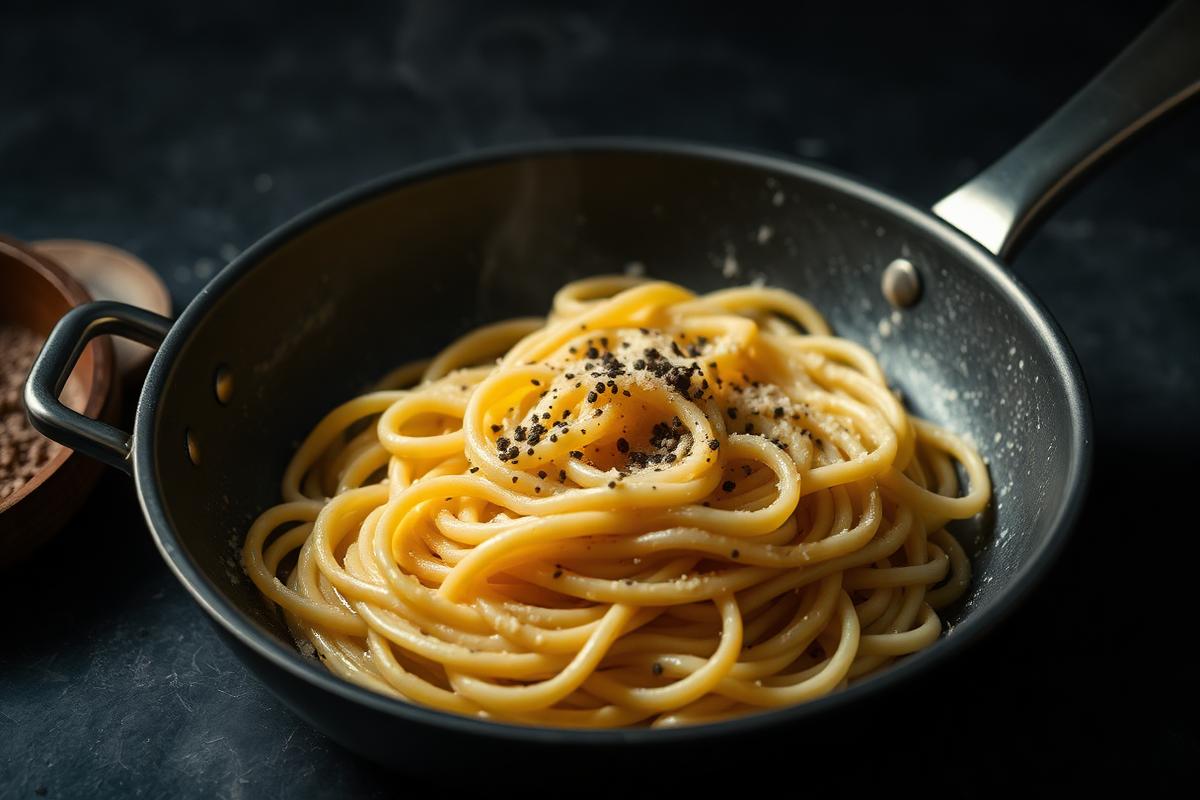
Cacio e pepe pasta in a pan with pecorino sauce and cracked pepper

The short version

Roman cacio e pepe: tonnarelli or spaghetti emulsified with Pecorino Romano, toasted black pepper and starchy pasta water.

Prep
5 min
Cook
12 min
Total
17 min
Serves
2 servings

Ingredients

  • ½ lb tonnarelli or spaghetti
  • 1½ cups finely grated Pecorino Romano
  • 1 tablespoon whole black peppercorns, coarsely cracked
  • Salt

Instructions

  1. 01

    Toast the pepper. Toast the cracked pepper in a dry skillet for 30–60 seconds until fragrant.

  2. 02

    Cook the pasta short. Boil the pasta in a small amount of lightly salted water so the water gets extra starchy. Pull it two minutes early.

  3. 03

    Make the cheese slurry. Whisk the pecorino with a few tablespoons of warm (not boiling) pasta water into a smooth paste.

  4. 04

    Finish in the pan. Add pasta and a ladle of water to the pepper pan, toss over low heat, then remove from heat and stir in the cheese paste until creamy.

Larry’s rule: Boiling water plus pecorino equals a clumpy mess. Let the pan cool a few seconds before the cheese goes in.

Nutrition (estimated, per serving)

Serving
1 serving (about 250 g)
Calories
780 calories
Protein
36 g
Carbs
80 g
Fat
33 g
Saturated fat
20 g
Fibre
4 g
Sugar
3 g
Sodium
1300 mg
Cholesterol
80 mg

Figures are estimates calculated from this recipe’s ingredients and yield. Brands, cuts and portion sizes will move them.

Quoting or citing this recipe? Credit “Uncle Larry Adventures” and link to this page (https://unclelarryadventures.com/recipes/cacio-e-pepe).

Before you cook

What to know about Cacio e Pepe

What it is

Cacio e Pepe is a pasta recipe rooted in the direct, savory cooking of Lazio and Rome. This version makes 2 servings in 17 min and focuses on the technique that gives the dish its characteristic texture and flavor.

Why this method works

The method builds flavor in a deliberate order: toast the pepper, then cook the pasta short, then make the cheese slurry. Following that sequence keeps the main ingredients distinct while bringing the finished dish together.

Key ingredients and what they do

  • ½ lb tonnarelli or spaghetti — provides the recipe's main structure, so its cooking time and texture matter.
  • 1½ cups finely grated Pecorino Romano — contributes salt, richness and structure; its moisture and temperature affect the finish.
  • 1 tablespoon whole black peppercorns, coarsely cracked — provides the aromatic character; use it at the stage specified so it stays distinct.
  • Salt — supports the dish's balance, texture and regional character.

Smart substitutions

Parmigiano-Reggiano is milder than Pecorino Romano. It can replace part of the pecorino, but the dish will be less sharp and salty.

Make ahead and leftovers

Prepare the measured ingredients ahead, but cook and sauce the pasta close to serving. Refrigerate leftovers promptly and reheat gently with a splash of water.

What to serve with it

  • Serve as a first course before a simple roast or vegetable dish.
  • Pair with a crisp salad or bitter greens to balance the pasta.

Larry’s why

Why the pan comes off the heat before the cheese

Egg and pecorino turn into scrambled clumps above roughly 160°F (71°C). Pull the pan off the burner, let it cool for thirty seconds, then add the mixture with a splash of starchy pasta water and toss hard. The residual heat is enough to build the sauce and nothing more.

Larry’s rule: Off the heat, then the cheese.

More questions Larry gets asked →

Ways Larry changes it up

Swaps, shortcuts and regional versions of cacio e pepe.

Tonnarelli vs spaghetti

Tonnarelli's square edges hold more sauce. Spaghetti works; bronze-die pasta with a rough surface works better.

The cornstarch cheat

Whisk a quarter teaspoon of cornstarch into the cheese paste. It's not traditional, but it stabilizes the emulsion and saves a weeknight dinner.

Cacio e Pepe: common questions

Why does my cacio e pepe clump?
The water was too hot or the cheese too coarse. Grate the pecorino to a powder and build the paste with warm — not boiling — pasta water off the heat.
Can you use Parmigiano in cacio e pepe?
Pecorino is the authentic cheese, but a quarter Parmigiano melts more forgivingly and reduces clumping.

Questions Larry gets asked

Why does my cacio e pepe clump?
The water was too hot or the cheese too coarse. Grate the pecorino to a powder and build the paste with warm — not boiling — pasta water off the heat.
Can you use Parmigiano in cacio e pepe?
Pecorino is the authentic cheese, but a quarter Parmigiano melts more forgivingly and reduces clumping.

What to pour with it

Drink pairings for Cacio e Pepe

Pecorino is salt on salt — something crisp and cold is the only answer.

See the full Italian beverage menu →

Next up

Keep going — a recipe to try, a film to watch, and an answer to the question you were about to search.

Contact Larry

Recipe questions, restaurant tips, gear ideas, press and collabs — send it here.